Explore Aluminum Foundry and its significance in large-scale aluminum casting
Wiki Article
Understanding the Various Sorts Of Processes in An Aluminum Foundry for Reliable Manufacturing
In An Aluminum Foundry, various casting processes play a vital duty in manufacturing performance. Each technique, from sand casting to pass away spreading, provides distinctive benefits that cater to particular producing needs. Recognizing these procedures is crucial for enhancing quality and price. Nevertheless, the selection of casting strategy can considerably influence general result. As shops check out these options, they must take into consideration which techniques straighten best with their manufacturing goals. What variables will ultimately assist their choices?Summary of Aluminum Foundry Processes
Aluminum Foundry procedures encompass a series of specialized strategies aimed at transforming raw Aluminum into usable elements. These procedures usually start with thawing the Aluminum, where key or scrap Aluminum is warmed until it reaches a molten state. Once melted, the Aluminum may undertake alloying, where particular components are included in improve its residential properties, such as toughness or corrosion resistance.Following melting and alloying, the Aluminum is put into mold and mildews to develop preferred forms. Air conditioning and solidification take place, during which the material takes on the form of the mold. After solidification, castings are eliminated and may need additional processing, including cutting, machining, or surface therapy to attain the last requirements. Quality assurance is important throughout the process, guaranteeing that the created elements satisfy industry criteria. Generally, Aluminum Foundry processes are necessary for generating a vast range of lightweight and durable products made use of in numerous applications.
Sand Casting Methods
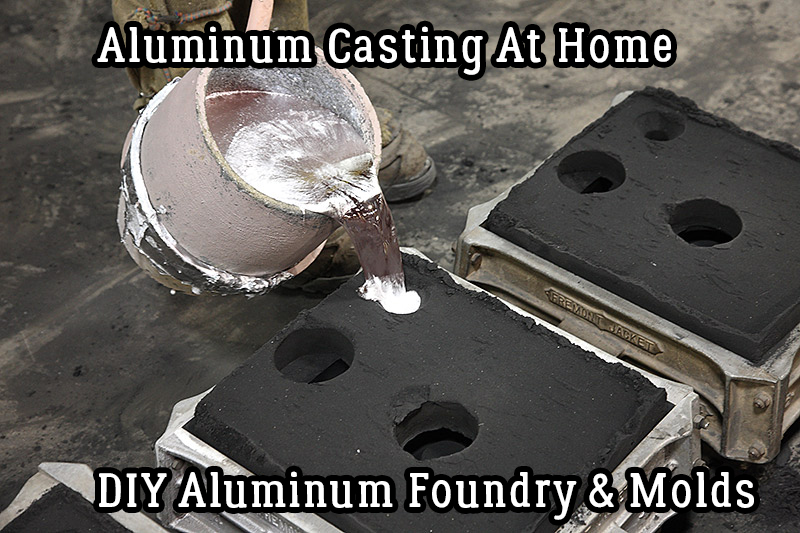
A considerable part of Aluminum spreadings are produced utilizing sand spreading strategies, which is a functional technique favored for its capacity to produce intricate shapes. In this process, a mold is made from sand blended with a binding representative, guaranteeing it can endure the liquified Aluminum's temperature. The pattern, typically constructed from steel or plastic, is positioned in the sand to create the cavity for the spreading. After removing the pattern, the mold is filled up with molten Aluminum, which strengthens right into the wanted shape upon air conditioning.Sand casting is specifically beneficial for reduced to medium manufacturing volumes as a result of its cost-effectiveness and adaptability. In addition, it enables easy modifications of mold and mildew designs, suiting different component geometries. Though it may not accomplish the dimensional precision of various other casting approaches, the surface finish can be boosted via subsequent machining. In general, sand casting remains a keystone of Aluminum Foundry procedures, making certain diverse applications across industries.
Die Spreading Methods
In the domain name of die spreading techniques, two main procedures stand out: the hot chamber and chilly chamber methods. Each method offers distinct benefits and difficulties, particularly relating to effectiveness and material compatibility. In addition, the option of die products plays a necessary role in establishing the general success and resilience of the spreading process.Warm Chamber Refine

Cold Chamber Process
Cold chamber die casting represents an alternate technique for producing Aluminum parts, particularly when dealing with steels that have higher melting points or when the molten steel is also responsive for hot chamber procedures. In this method, molten Aluminum is put into the die from an exterior ladle, which reduces the threat of contamination and permits for higher adaptability in alloy selection. The process entails infusing the molten metal right into a chilly die making use of a hydraulic piston, guaranteeing specific control over the injection speed and pressure. This technique is advantageous for creating intricate geometries and accomplishing high dimensional accuracy. Although it may need longer cycle times compared to warm chamber processes, cool chamber pass away casting is necessary for particular applications in Aluminum factories.Die Products Option
Choosing the proper die products is crucial for optimizing the die casting procedure and guaranteeing the long life and performance of the mold and mildews. One of the most generally utilized products consist of tool Aluminum, steel, and beryllium-copper alloys, each offering unique benefits. Tool steel is preferred for its durability and resistance to put on, making it excellent for high-volume manufacturing runs. Aluminum gives outstanding thermal conductivity, assisting in efficient heat dissipation, while beryllium-copper alloys combine stamina and thermal administration buildings, however at a higher price. Aspects influencing the choice consist of the complexity of the component, anticipated manufacturing volume, and the certain Aluminum alloys being cast. Inevitably, the best choice of die product can substantially improve performance and minimize general functional costs in Aluminum foundries.Investment Casting Procedures
While various casting techniques exist, investment casting stands out for its ability to produce intricate shapes with high precision and superb surface coatings. This process entails producing a wax pattern that is coated with a ceramic shell. When the shell sets, the wax is melted away, leaving a cavity that is filled with molten Aluminum.Financial investment spreading is particularly beneficial for creating complicated geometries that would be tough or difficult to accomplish with various other techniques. It permits tight resistances, reducing the need for extensive machining post-casting. In addition, the smooth surface area coating lessens the requirement for secondary operations, thereby improving effectiveness.
This strategy is widely made use of in sectors requiring detailed parts, such as aerospace and clinical markets. The flexibility of investment casting enables the production of both big and little quantities, making it a useful choice in Aluminum shops seeking to meet varied production requirements.
Long-term Mold Casting
Permanent mold and mildew spreading is a technique that employs reusable mold and mildews to create Aluminum components, boosting effectiveness in manufacturing. This technique offers a number of advantages, including improved dimensional precision and surface area finish, making it ideal for various commercial applications. By understanding its process, benefits, and uses, one can appreciate its value in the Aluminum Foundry field.Refine Summary
Aluminum Foundry processes encompass various strategies, one of which is permanent mold and mildew casting. This technique uses multiple-use molds, generally made from metal, enabling effective manufacturing of Aluminum components. The procedure begins with preheating the mold and mildew to boost fluidness and decrease defects. Molten Aluminum is after that poured into the mold under gravity or stress, guaranteeing specific filling and lessening air entrapment. When the Aluminum solidifies and cools, the mold is opened to recover the cast part. Irreversible mold casting is known for producing premium, dimensionally exact elements ideal for numerous applications. The strategy is especially helpful for high-volume production runs, as it considerably lowers material waste and boosts repeatability in manufacturing procedures.Benefits of Method
Although different casting approaches exist, permanent mold and mildew spreading uses unique benefits that make it a favored selection for many manufacturers. This strategy permits premium dimensional accuracy and surface finish, minimizing the requirement for comprehensive machining. The reusable mold and mildews, usually made from steel, improve manufacturing performance by enabling fast cycle times and lower overall material prices. Additionally, permanent mold and mildew spreading advertises enhanced mechanical buildings in the last product because of the controlled air conditioning rates, which result in finer grain frameworks. In addition, as the process creates much less waste compared to sand casting, it is much more eco-friendly. On the whole, these benefits add to cost-effectiveness and top notch results, making long-term mold and mildew casting a critical option in the Aluminum Foundry industry.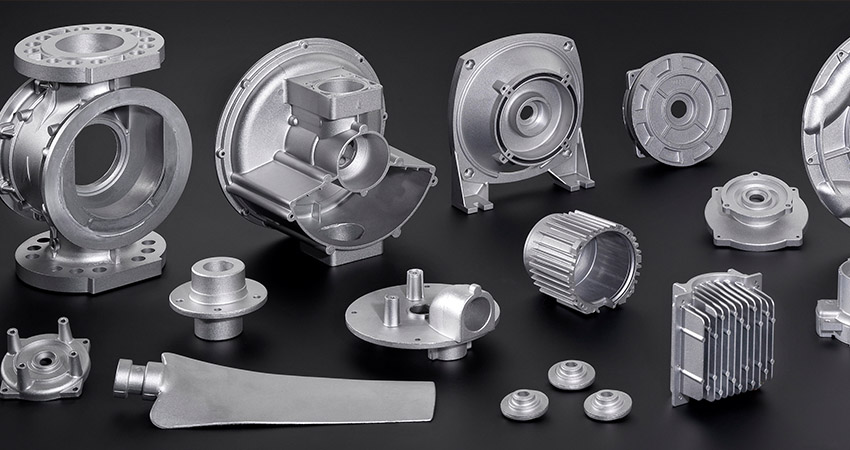
Applications in Industry
In numerous markets, long-term mold spreading plays a crucial function in creating top notch Aluminum components, particularly where precision and toughness are extremely important - Aluminum Foundry. This method is extensively made use of in the automobile industry for making engine blocks, transmission real estates, and various other important components that require exact tolerances and durable performance. Additionally, the aerospace sector advantages from irreversible mold casting for parts that have to stand up to extreme conditions while keeping lightweight characteristics. Additionally, durable goods commonly utilize this technique for generating durable and aesthetically pleasing items, such as cookware and ornamental components. The capability to achieve complicated geometries and fine surface area finishes makes permanent mold and mildew casting a favored selection across diverse applications, guaranteeing trusted and effective manufacturing in different industrial contextsMachining and Finishing Operations
Accuracy machining and finishing procedures play an important function in the Aluminum Foundry procedure, making sure that cast elements meet rigorous top quality and dimensional specifications. These operations involve different methods, such as milling, turning, exploration, and grinding, which are used to fine-tune the surface areas of actors parts. Each strategy is picked based upon the certain needs of the part, including its size, form, and designated application.Ending up procedures, such as anodizing and surface area sprucing up, enhance the visual allure and rust resistance of Aluminum components. Furthermore, these operations aid accomplish tighter tolerances and smoother coatings, which are important for performance in various industrial applications.
Quality Assurance in Aluminum Foundries
Quality control in Aluminum foundries is a crucial element that guarantees the stability and performance of actors items. This procedure entails methodical assessments and testing at different stages of manufacturing. Shops carry out rigorous high quality checks, including aesthetic inspections, dimensional dimensions, and material evaluation, to establish that every actors satisfies specified criteria.Furthermore, progressed strategies such as non-destructive testing (NDT) are used to discover interior defects that might not be visible on the surface. By monitoring variables like temperature level and alloy make-up, foundries can keep suitable production problems, minimizing the possibility of issues.
Moreover, adherence to industry requirements, such as ISO qualifications, strengthens a factory's dedication to top quality. Continuous training and development of employees also play an essential duty in fostering a society of high quality recognition. Ultimately, reliable quality assurance techniques enhance consumer fulfillment and reduce pricey rework and scrap, ensuring the Foundry's competitive side in the market.
Often Asked Inquiries
What Precaution Are Essential in An Aluminum Foundry?
Precaution in An Aluminum Foundry consist of proper personal safety tools, air flow systems to manage fumes, fire prevention procedures, routine devices upkeep, staff member training on hazards, and emergency reaction prepares to attend to prospective mishaps properly.Just How Does Recycling Aluminum Affect Foundry Processes?
Reusing Aluminum considerably affects Foundry processes by reducing raw product prices, decreasing waste, and decreasing power usage. This environment-friendly strategy improves production efficiency while promoting sustainability, ultimately benefiting both the setting and the Aluminum sector.What Are the Ecological Influences of Aluminum Foundries?
The environmental impacts of Aluminum factories include air and water pollution, high power usage, and significant greenhouse gas emissions. These variables add to environment damage and health risks for bordering neighborhoods, necessitating improved sustainability techniques.Exactly How Do Foundries Take Care Of Waste and Emissions?
Factories manage waste and exhausts via different techniques, consisting of reusing scrap steel, executing filtration systems, and sticking to environmental regulations. These procedures aim to decrease ecological impact while maintaining functional effectiveness and performance.What Is the Duty of Automation in Aluminum Foundries?
Automation in Aluminum foundries enhances effectiveness and accuracy. It reduces human error, maximizes manufacturing processes, and lowers labor expenses. By Aluminum Foundry incorporating advanced innovation, foundries can enhance item high quality and warranty consistent operational efficiency.Aluminum Foundry processes encompass a collection of specialized strategies aimed at transforming raw Aluminum right into useful components. These processes typically begin with thawing the Aluminum, where key or scrap Aluminum is heated up until it gets to a molten state. The hot chamber procedure is a highly effective die casting method generally utilized for Aluminum alloys. Cold chamber die casting represents a different method for generating Aluminum components, especially when dealing with steels that have higher melting points or when the molten metal is too responsive for warm chamber procedures. Aluminum Foundry. Aluminum Foundry procedures include numerous strategies, one of which is permanent mold and mildew spreading
Report this wiki page